
 Buyer's Guide
How to Choose the Best Cosmetic Products Manufacturer for Your Brand
Choosing cosmetic products manufacturers? Explore key quality, R&D, formulation, and production factors, and discover what to look for in a reliable partner.
What's inside this guide ▼
- 01What to Look for in Cosmetic Products Manufacturers
- 02Why Choosing the Right Manufacturer Matters
- 03Cosmetic Manufacturers in India: Key Evaluation Points
- 04How Bioavenues Fits Into the Selection Process
- 05Questions to Ask Before Selecting a Manufacturer
- 06Common Mistakes Brands Should Avoid
- 07Conclusion
A successful cosmetic brand depends on more than attractive packaging and a strong marketing strategy. The quality, consistency, formulation, and manufacturing practices behind each product can directly influence customer trust and long-term brand performance. That makes choosing the right cosmetic products manufacturers an important business decision.
Whether you are developing skincare, haircare, personal care, or cosmeceutical products, your manufacturing partner should understand your product concept and have the capabilities to turn it into a consistent finished product. For brands evaluating cosmetic manufacturers in India, the selection process should involve careful assessment of formulation expertise, quality systems, facilities, product development, and support services.
01
What to Look for in Cosmetic Products Manufacturers
Not every manufacturer offers the same level of technical support or production capability. A structured evaluation can help brands identify a partner that fits their product requirements and growth plans.
1. Evaluate Manufacturing Infrastructure
Start by understanding where and how products will be manufactured.
A professional facility should have appropriate manufacturing infrastructure, hygiene controls, quality processes, and equipment suited to the products you intend to develop. The facility should also be capable of maintaining consistency from one production batch to another.
Ask potential manufacturers about:
- Manufacturing facilities and equipment
- Quality assurance procedures
- Production capacity
- Hygiene and contamination-control practices
- Applicable certifications
- Batch consistency and documentation
Infrastructure is particularly important when a brand plans to move from small-scale development to larger commercial production.
2. Check Formulation and R&D Capabilities
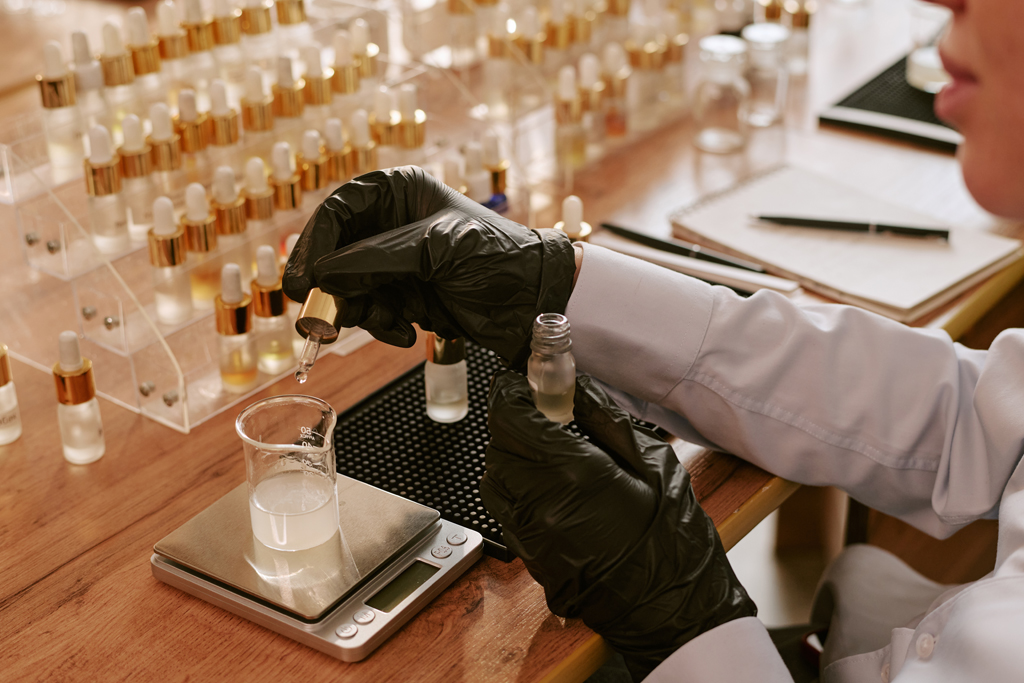
A manufacturer should ideally contribute more than production alone. Formulation expertise can be valuable when a brand needs a new product, wants to modify an existing formula, or needs a product adapted to a particular target audience.
Look for an R&D team, formulation specialists, and a documented product-development process. Discuss your desired ingredients, product format, target consumer, positioning, and performance expectations before committing to production.
A capable manufacturer should also be able to explain the development process clearly, including sampling, formulation refinement, testing, approval, and production.
3. Assess Ingredient and Raw Material Sourcing
Ingredients are central to the identity and performance of cosmetic products. Consistent sourcing therefore deserves careful attention.
Ask manufacturers how they approach raw material selection and whether they have systems for maintaining consistent quality. It is also useful to understand whether they can work with specific ingredients or formulation requirements relevant to your product concept.
For brands developing active-focused skincare, for example, the manufacturer's knowledge of ingredients and formulation combinations can be especially important.
4. Evaluate Quality Control and Assurance Systems
Quality should be built into every stage of manufacturing, rather than being checked only after production is complete.
Before selecting a best cosmetic products manufacturer, ask how quality is monitored throughout formulation, production, packaging, and finished-product handling.
Important areas to discuss include:
- Raw material quality
- In-process controls
- Finished-product checks
- Batch documentation
- Facility hygiene
- Quality assurance systems
- Applicable certifications and standards
A transparent manufacturer should be able to explain its quality approach without relying solely on broad marketing statements.
5. Compare Private Label and Custom Product Development Options
Every brand has its own product development requirements. A startup may prefer private-label products that can support a faster route to market, while an established healthcare or beauty company may need customized formulations. Some businesses may also require white-label solutions with their own branding and packaging.
Before choosing a manufacturer, determine whether it can support the model you need:
- Private label: Select from existing formulations and develop them under your brand.
- Custom formulation: Collaborate on a product developed around specific requirements.
- Third-party manufacturing: Work with a manufacturer to produce products according to an agreed specification.
The right approach depends on your budget, product strategy, development timeline, and desired level of customization.
02
Why Choosing the Right Manufacturer Matters
The manufacturer becomes an important part of the supply chain, even though the consumer may never interact with them directly.
A formulation that varies between batches, inconsistent packaging, inadequate communication, or production delays can create challenges for a brand. Conversely, a structured manufacturing relationship can make product development and scaling more manageable.
For doctors and healthcare professionals involved in skincare or cosmeceutical brands, technical formulation knowledge may be particularly relevant. B2B buyers should also evaluate a manufacturer’s ability to scale production, maintain documentation, follow quality standards, and communicate effectively.
Consumers also increasingly pay attention to ingredients, product claims, safety, and brand credibility. A thoughtful manufacturing process helps brands build products on a stronger foundation.
03
Cosmetic Manufacturers in India: Key Evaluation Points
India has a broad ecosystem of manufacturers serving skincare, haircare, personal care, and related categories. When comparing cosmetic manufacturers in India, businesses should avoid choosing solely on price.
A better approach is to assess the overall value and capabilities a manufacturing partner can provide.
Compare These Factors Before Making a Decision
| Factor | Questions to Ask |
|---|---|
| Product development | Can the manufacturer develop or customize formulations? |
| R&D | Is there an in-house product development team? |
| Quality | What quality systems and certifications apply? |
| Raw materials | How are ingredients sourced and controlled? |
| Manufacturing | Can production scale with your requirements? |
| Packaging | Is packaging support available? |
| Product range | Does the manufacturer understand your category? |
| Communication | Is there a clear development and production workflow? |
| Business model | Does it support private label, white label, or third-party manufacturing? |
This comparison helps move the decision away from a simple price-based evaluation toward long-term suitability.
04
How Bioavenues Fits Into the Selection Process
Bioavenues Insight
For brands researching cosmetic products manufacturers, Bioavenues provides an example of a manufacturer offering product development and manufacturing services across skincare, haircare, and personal care.
According to information published on the Bioavenues website, the company operates a modern cosmeceutical manufacturing plant and offers customized formulation development. Its site also states that it has an in-house product research and development team with more than 15 years of experience and more than 100 innovative formulations for different therapy segments.
The company describes its model as a single-window solution covering areas such as formulation development, production, packaging design and production, and marketing aids. This type of integrated approach can be useful for brands that prefer to coordinate several stages of product development through one manufacturing partner.
Bioavenues also presents private-label and white-label manufacturing as part of its offering. Its private-label page highlights customized formulation development, an in-house R&D team, and services extending from formulation to packaging.
Product Development and Category Experience
Bioavenues lists product categories including sensitive-skin products, vitamin C products, haircare, acne care, and baby care on its website. Its listed formulations include products such as vitamin C serums, face washes, hair conditioners, shampoos, acne-care products, and baby-care products.
For a brand evaluating potential manufacturing partners, a broad product portfolio can provide useful context when assessing whether a manufacturer has experience relevant to the intended category.
The company also states that correct raw material sourcing and consistent quality are important elements of successful product development, while highlighting its product research and formulation development team.
Facilities and Quality Information
Bioavenues publishes information about its facilities and quality systems on its website. Its facilities page states that the manufacturing environment includes dedicated air-handling units with HEPA filters and identifies WHO, ISO, and Halal certifications.
For prospective clients, independently reviewing certifications, facility information, documentation, product specifications, and regulatory requirements remains an important part of manufacturer due diligence.
05
Questions to Ask Before Selecting a Manufacturer
Before signing an agreement, prepare a clear list of questions.
Consider asking:
- Can you provide relevant product-development examples?
- What is your formulation development process?
- What quality systems apply to the manufacturing facility?
- Which certifications are current and applicable to my product?
- What are the minimum order quantities?
- What support is available for packaging and labeling?
- How are raw materials selected and controlled?
- What is the expected development and production timeline?
- How are product specifications documented?
- Can production scale as demand increases?
These questions can reveal differences between manufacturers that may not be obvious from a website or product catalogue.
06
Common Mistakes Brands Should Avoid
Choosing a manufacturer based only on the lowest quotation is one of the most common mistakes.
A lower manufacturing price may not represent better overall value if the partner lacks suitable R&D support, quality processes, communication, packaging capabilities, or scalability.
Other mistakes include:
- Skipping facility and certification verification
- Failing to define product specifications
- Choosing without reviewing samples
- Ignoring minimum order quantities
- Not discussing packaging requirements early
- Assuming every manufacturer offers custom formulation
- Failing to establish responsibilities for quality and documentation
A careful selection process can reduce avoidable problems later in the product lifecycle.
07
Conclusion
Finding a suitable cosmetic products manufacturer requires looking beyond pricing and product catalogues. Brands should assess manufacturing infrastructure, formulation expertise, R&D capabilities, ingredient sourcing, quality systems, scalability, and the level of support available throughout product development.
For businesses exploring cosmetic manufacturers in India, Bioavenues is one manufacturer whose published information highlights customized formulation development, in-house R&D, private-label and white-label solutions, and integrated services from formulation through packaging.
The best decision ultimately depends on your product category, technical requirements, target market, order volumes, and business goals. Take time to compare manufacturers, verify relevant credentials, review product samples and specifications, and select a partner whose capabilities align with your brand's long-term needs.
Ready to bring your cosmetic brand to life?
Partner with Bioavenues for GMP-certified formulation, manufacturing and private label solutions built for scale.
Get In Touch